
Dorchester Projected Versus Actual Release
A projected, tentative, or scheduled release date is a calculation based on the record available at a given time. The actual release date is when the person physically leaves that custodian. Those points can differ. A court can alter a sentence, an agency can add or restore credit, another authority can lodge a hold, or a parole plan can remain incomplete. The official calculation should therefore be read with its “as of” date and the office that created it.
Pretrial custody works differently. A person awaiting trial at the Dorchester County Detention Center has not yet received a final sentence from which staff can compute a sentence end. A bond order, dismissal, plea, trial result, time-served judgment, or transfer may later control the exit. Sentenced local and state prisoners can have calculated dates, but the correct source depends on who holds and administers the sentence.
DPSCS Shows No Projected Date
Maryland's public DPSCS Incarcerated Individual Locator has no projected-release-date field. It is designed to report the custody location of people currently committed to specified Maryland correctional facilities and some short-sentenced people held in pretrial facilities. DPSCS also warns that the public interface does not list every person in its custody. Its published result description does not expose a “Projected Release Date,” “Tentative Release Date,” or “Maximum Expiration Date” field.
The limit becomes even more important after release. DPSCS states that people who are no longer in custody for any reason, including release or escape, are not listed. A missing name does not display a historical discharge record or date. It also does not prove release. The person could be omitted, transferred, entered under a different spelling, outside the public database's scope, or no longer held for another reason.
The official DPSCS Incarcerated Individual Locator shows the first-name and last-name search and its express current-custody limitation.
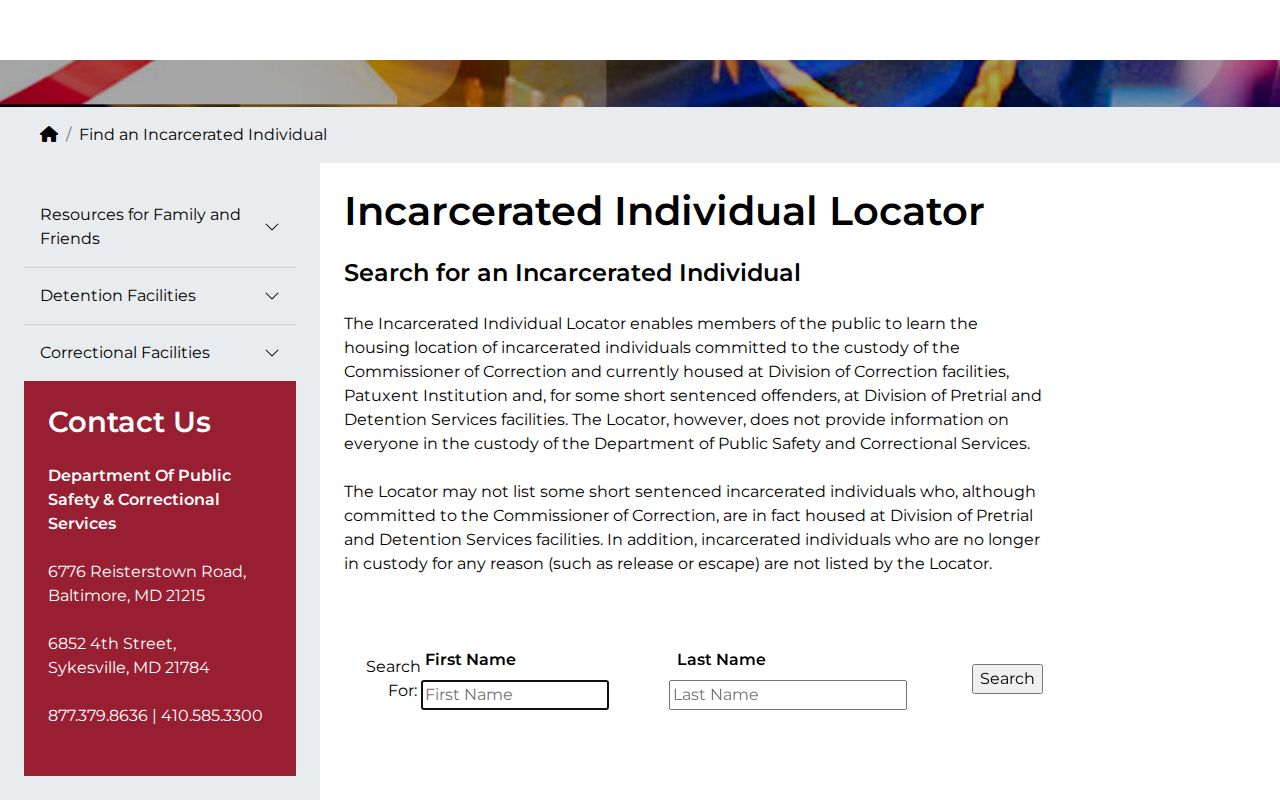
Use the locator to identify a current facility, then request the actual existing sentence-status or release-calculation record from the custodian. Do not turn locator silence into a release statement.
Note: The public DPSCS locator cannot supply the individual projection that its own result fields do not display.
Find a Dorchester Projected Release
Start by classifying the sentence. A Dorchester local term is administered through the Detention Center and the county commitment record. A Maryland Division of Correction term is administered through DPSCS, even if the conviction arose in Dorchester County. The sentencing docket supplies the legal judgment in either path, but the jail or state corrections system maintains the operational calculation used for custody.
- Search the court case and identify whether the person is pretrial, locally sentenced, or committed to state correctional custody.
- For current state custody, use the DPSCS locator only to identify the facility and confirm the person is displayed.
- Ask DPSCS for the existing sentence-status or calculation record that identifies any tentative, mandatory, or maximum release date.
- For a local sentence, ask the Dorchester County Detention Center for its existing sentence and release calculation.
- Compare the agency record with the court commitment, presentence credit, and later docket entries.
- Record the calculation's title, source, and “as of” date before reporting it.
A Maryland Public Information Act request should seek a specific existing record. For state custody, identify the release or discharge transaction, date and type, plus any publicly releasable calculation or sentence-status record showing a tentative, mandatory, or maximum date. The PIA does not require DPSCS to create a new calculation. DPSCS treats a new report or custom list as a discretionary special service, so a focused request is more likely to reach the record that already exists.
For the local route, call the Dorchester County Detention Center at 410-228-8101 and ask which office keeps sentence calculations. Compare any disclosed value to the court commitment. The Dorchester County release-record process explains how the local release transaction and court authority work together after the person actually leaves.
Maryland Credits Change Release Dates
Maryland calls sentence reductions “diminution credits.” For state custody, Correctional Services §3-704 generally awards good-conduct credit in advance at 10 days per calendar month, prorated for a partial month. A sentence that includes specified violent or drug offenses receives the lower rate of 5 days per month. These are statutory categories. A reader should not assign a rate from the charge name alone without checking the judgment, offense date, and current law.
Work, education, and special-project credits are governed by §§ 3-705, 3-706, and 3-707. Section 3-708 caps combined deductions, generally at 20 days per month for the higher-credit class and 10 days for specified sentences. Credits may also be revoked or restored, which means a date based on yesterday's credit balance may not be the date in the current official record.
Maryland's often repeated “85%” statement is not a rule for every person. Under §3-702, total diminution credits for a crime of violence committed on or after October 1, 2009 may not exceed 15 percent of the aggregate sentence for crimes of violence. That produces an 85 percent floor before credit-based mandatory release for that category. It is separate from discretionary parole eligibility, and some sexual offenses carry added or complete credit limits.
Note: Current statutory text, the offense date, and the actual judgment control; a general percentage cannot replace the agency calculation.
Dorchester Local Release Calculations
A state DOC credit rate should not be copied onto a local Dorchester sentence. Request the Detention Center's existing sentence or release calculation and ask which county or local credit provisions staff applied. Then compare that record with the court commitment. If the two appear inconsistent, ask Corrections to explain the difference rather than attempting to rebuild the sentence with an online calculator.
No public Dorchester County release-date calculator or weekend-release policy was found in the project research. That negative result matters. It prevents a confident claim that a sentence ending on a weekend will lead to an earlier weekday exit, or that the Detention Center applies a stated online formula. The proper answer must come from the current local record and the agency administering the term.
A rough equation such as sentence end minus jail credit minus valid diminution credit can help identify the broad parts of a calculation. It cannot safely produce the official date. Concurrent and consecutive counts, modified judgments, presentence credit, revocation or restoration of credits, new sentences, detainers, and administrative corrections can all change the result.
Dorchester Release Dates Can Move
A date may move earlier or later for reasons found in several records. The agency calculation shows the administrative result, while the court docket can show a new judgment or warrant. Parole records address eligibility and decisions. A detainer is a request or authority for another agency to take custody, and it can prevent a scheduled community exit even when the original sentence reaches a release point.
| Factor | Possible effect on the release date |
|---|---|
| Presentence jail credit | Properly awarded time may reduce the remaining term. |
| Concurrent or consecutive terms | Counts served together differ from counts served one after another. |
| Earned-credit award | A valid credit can move a mandatory release point earlier. |
| Credit revocation or restoration | Discipline or later restoration can shift the calculation in either direction. |
| Modified court judgment | A corrected or reduced sentence changes the legal base for the date. |
| Parole action | Approval may create a conditional path, but conditions can delay the physical exit. |
| Detainer, warrant, or new term | Another authority may continue custody or add sentence time. |
Conditional release under Correctional Services §7-501 generally occurs after an eligible DOC term less awarded diminution credits. For a violent crime committed on or after October 1, 2009, that release cannot occur before parole eligibility under the cited §7-301 provisions. The result is a legal framework, not a self-service calculator.
Dorchester Parole Is Not Release
Parole eligibility, a parole grant, mandatory release, and maximum expiration are distinct points. Under Correctional Services §7-301, the ordinary parole-eligibility threshold for a Maryland sentence of six months or more is one-fourth of the aggregate sentence. For a violent crime committed on or after October 1, 1994, eligibility is generally the greater of one-half of the aggregate violent-crime sentence or one-fourth of the total aggregate sentence, plus any nonparolable term. Life-sentence rules depend on the sentence and crime date.
Eligibility creates a chance for consideration. It does not create a release order. Even a favorable Maryland Parole Commission decision may depend on an approved home plan, completion of a program, a future release month, or other pre-release conditions. Institutional misconduct can suspend an approval and lead to further proceedings. Physical release should be confirmed separately through the holding agency, the release transaction, and a custody-change alert.
Once in the community, parole and mandatory supervision still represent service of the sentence under conditions. Dorchester County post-release supervision is distinct from probation, and the assigned Cambridge office route depends on the approved residence.
Dorchester Community Release Projections
Maryland's DPSCS Community Releases dashboard can be filtered to Dorchester County, but it does not provide a named-person release-date lookup. The dashboard counts projected returns based on completed home plans. DPSCS expressly warns that those projections do not necessarily equal releases that have already happened. Its community-release measure also excludes custody-to-custody transfers and deaths.
That makes the dashboard useful as county planning context. It can show anticipated returns tied to Dorchester, while an individual calculation remains in the person's case-management or sentence record. A completed home plan signals preparation for possible community return. It does not prove that the person departed custody or that the projected date stayed unchanged.
The official Dorchester-filterable community releases dashboard displays the projection context and its warning about completed releases.
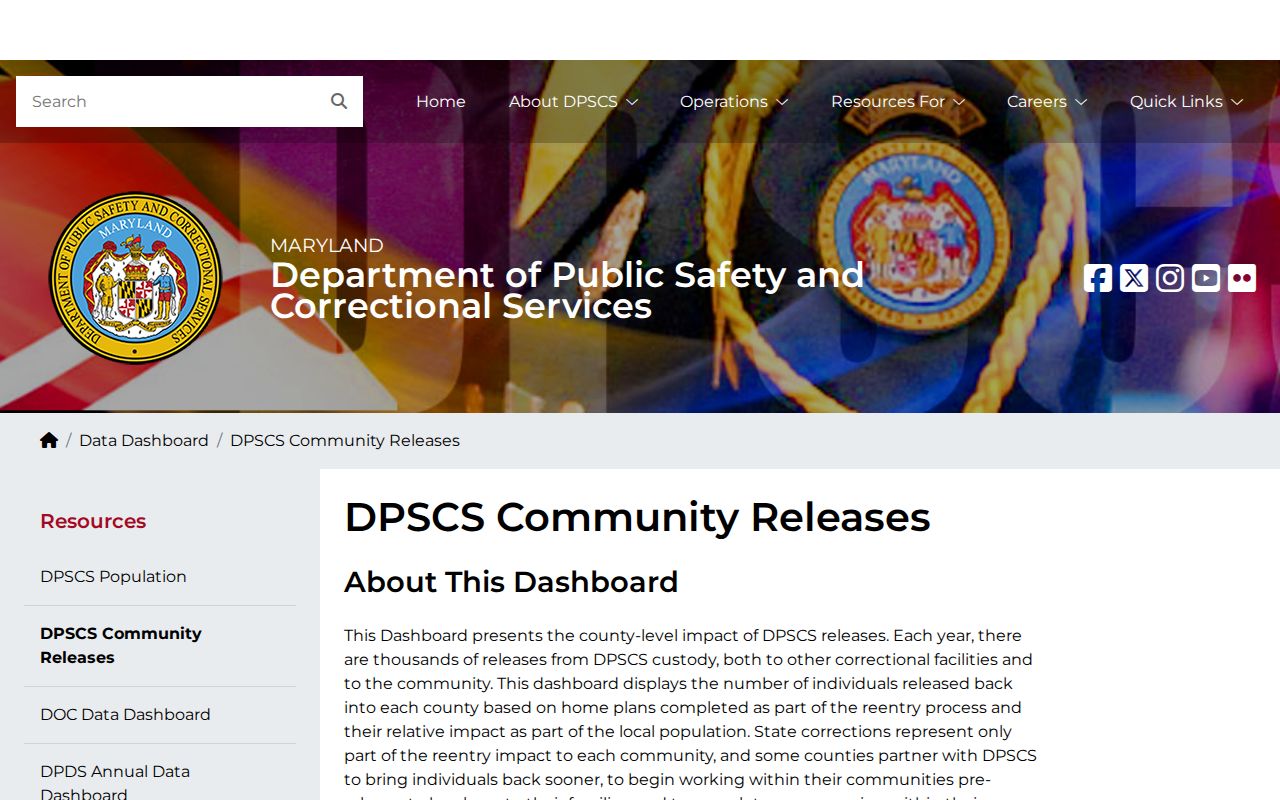
The county filter should never be used to name a person, assign a personal date, or replace the current calculation held by the corrections agency.
Note: A Dorchester dashboard projection is aggregate planning data, while an individual release date must come from that person's official record.
Confirm Dorchester Release Dates
For a date that has not yet arrived, obtain the newest available calculation and note when it was prepared. Check the court docket for later sentence changes, credit rulings, violations, and warrants. Ask the holding agency whether a detainer or pending transfer affects physical departure. If supervision is expected, remember that the assigned office follows the approved residence and may not be the county of conviction.
Near the projected date, register for a Dorchester County VINE inmate check and release alert. VINE can report a custody change from a participating agency, but pair the alert with the jail or prison record. After release, request the release or discharge transaction if formal proof is needed. The final record should state what occurred, not merely what an earlier forecast predicted.